If we are more comfortable looking at the world through a lens of logic, balancing a checkbook, or cutting a recipe in our heads by fifths or performing any math skill, we might say we are left brained. And if we prefer the creative world, operate on intuition and love music and art, we may consider ourselves right brained. But the truth is, we need both sides of our brains to do all of those things in our comfort zone. And we need the two sides of the brain to talk to each in order to be truly successful at anything we do.
The two sides of the brain are divided by the corpus callosum. A fully developed corpus callosum carries 4 billion messages per second between the right and left brain through 200 million nerve fibers. This allows for complex thought to be manipulated into formal reasoning. Without that conversation and without stimulating that conversation, we are inhibiting full operational value of the two hemispheres and the full functioning of reasoning. In other words the more we can access both sides of the brain the more intelligently we operate in our world.
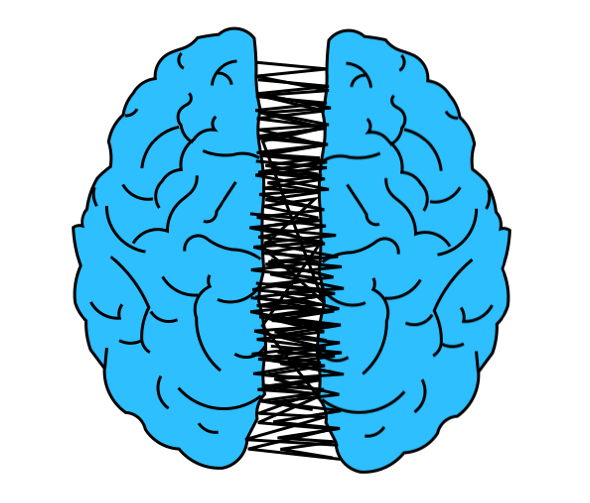
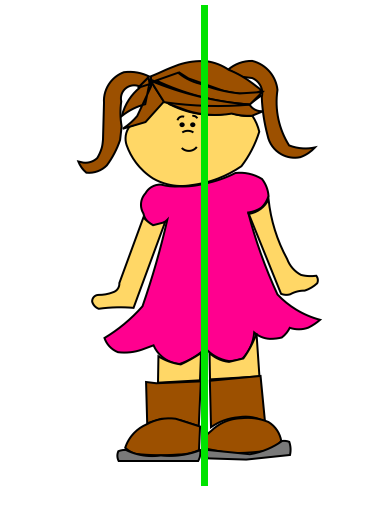
In order to fully access both sides of the brain, we must establish neural connection across the corpus callosum. We do it by moving the appendages from one side of the body to the other side, across the midline. The midline is an invisible line that runs from the top of the head down to the ground dividing the body into right and left sides. he midline runs down the middle of the body from tip of the head to the floor dividing the body into right and left.
Our bodies are divided just like our brains, right down the middle. There is an imaginary line that runs from the tops of our heads all the way to the ground separating our bodies into right and left sides. This imaginary line also runs along the corpus callosum, separating the two sides of the brain. When we bring one body part across that middle line into the space of the other body part, like crossing our legs, our scratching an elbow, we are crossing the midline.
Crossing the midline is a skill that is developed with our first movement patterns, like rolling over, and should be fully developed by age 3 or 4. It is further fortified in other skills and movement patterns developed along the way like crawling and playing. The more freedom of movement a child is given, the more he is going to naturally develop his crossing the midline skills.
The stronger the connection across the midline, the easier it is to process information. Crossing the midline helps integrate the brain, helping children lay down critical neural pathways for attention, focus, behavior, academics and more. This simple motor movement, helps establish a conversation across the corpus callosum and prevent the disconnection that leads to challenges and frustration.
Rolling over is the first hefty crossing the midline motor movement, followed by crawling, pulling up and playing. All of this activity allows the baby’s brain to move from one that is right side dominant, driven primarily by emotion and reaction to one that begins to reason around age 3. It is at this time we begin to see the evolution of questions like why and how which indicate more critical and complex thought brought on by an integration of the two sides of the brain.
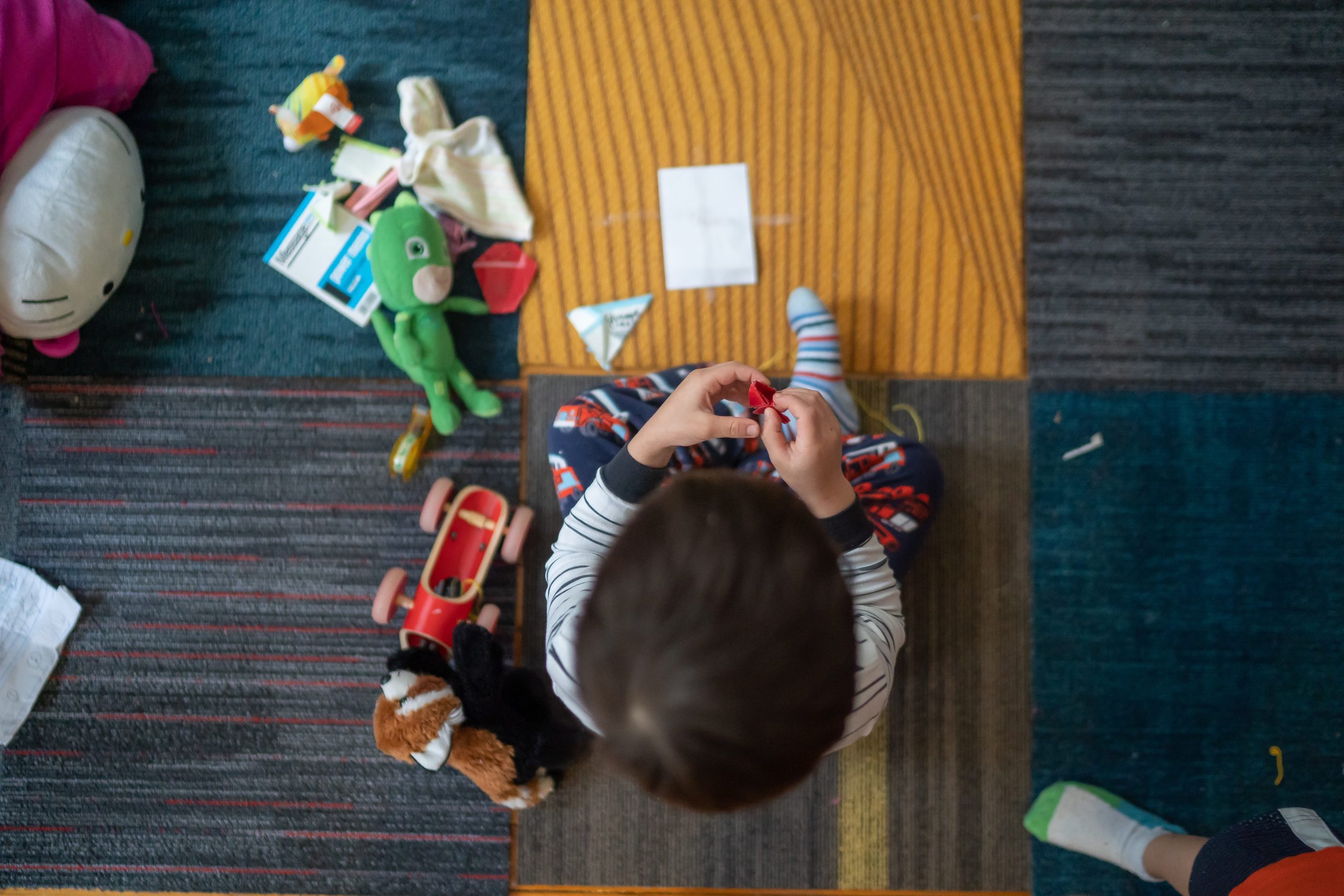
Children start crossing the midline whenever they bring one hand across the body whether in play, or exploration which can begin well before they are able to sit. They continue to develop it in crawling, then swimming, riding a bike, playing striking sports, doing cartwheels and climbing to name a few.
When the two sides of the brain do not communicate effectively, there is disintegration.
But the sooner we can allow significant physical movement, the better the chance of supporting right-left brain integration and a more robust interaction with the surrounding environment.
We are crossing the midline actively when we
- Brush teeth or hair
- Alternate feet on the stairs
- Throw a ball
- Swing a bat
- Play an instrument
- Tie shoes
- Climb ladders
- Cross the monkey bars
- Crawl
- Sit criss cross applesauce
- Buckle a seatbelt
- Turn a steering wheel
- Dance
How do you strengthen it?
We strengthen this skill with use, by actively bringing the appendages across the midline. Some big body crossing the midline ideas are:
- Crawling
- Climbing
- Monkey bars — hand over hand
- Movement games with streamers or ribbons
- March and try to touch hand or elbow to opposite leg
- Windmills
- Wiping down a table or blackboard
- Kicking a ball
- Animal walking (crab, bear, puppy dog)
- Marching like a toy soldier
- Games like Twister or Simon Says
- Yoga
- Drawing big sideways figure 8s (inifinity symbol) on a blackboard or in the sand or with sidewalk chalk
- Sweeping
- Driving a car using a steering wheel (paper plate or polyspot) and turning hard right and left
- Sitting back to back with a friends and passing a ball from side to side to that friend
This all distills down to one critical message: motor movements are directly related to brain development. When we remove physicality from a young child’s day, even with the best of intentions, we are inhibiting his ability to use his body not just to explore his world, but to organize and develop his brain for success. As Maria Montessori said, “The hand is the instrument of the mind,” and her words speak volumes.
